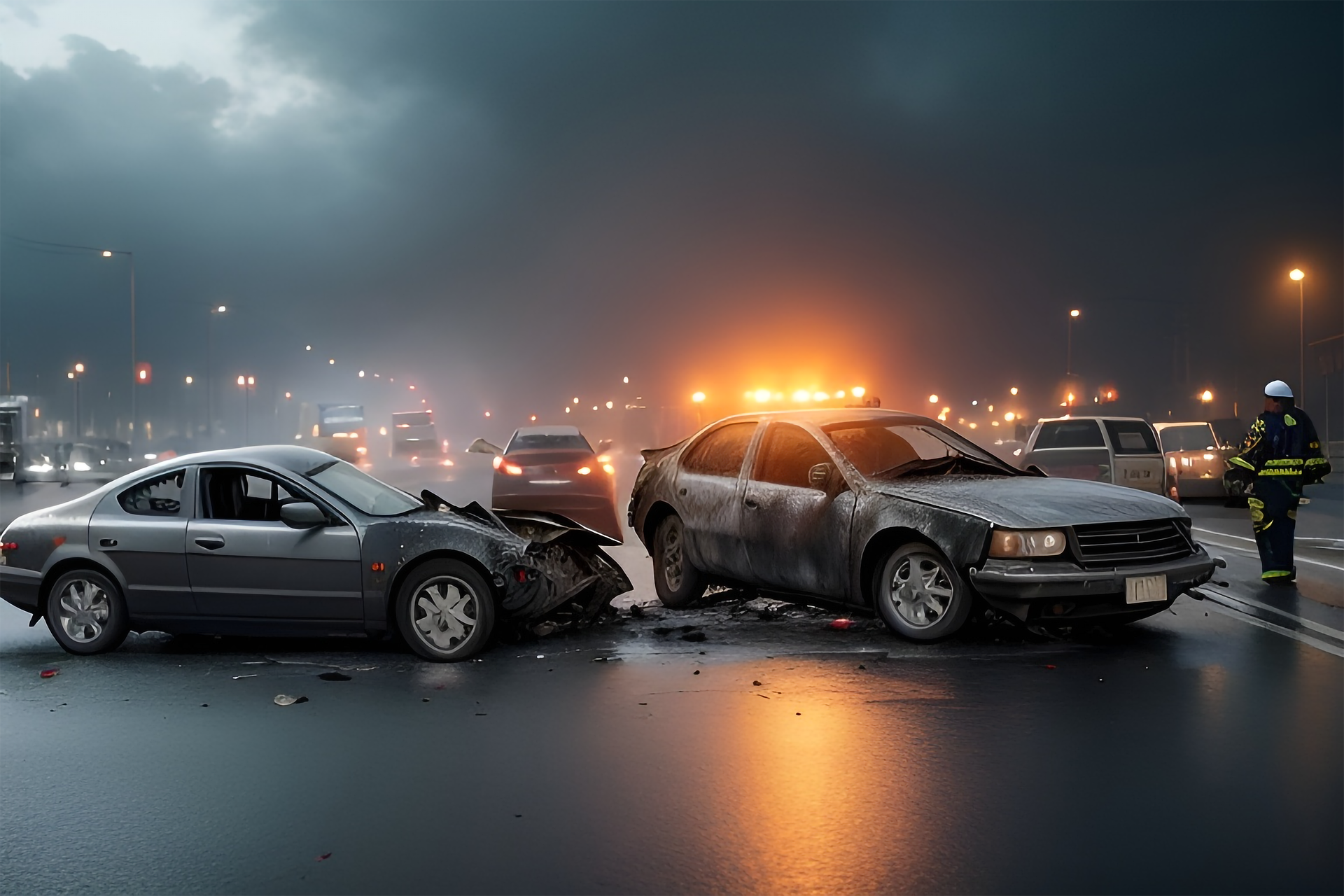
Nonhlanhla doesn’t remember the crash itself. She remembers the sound before it, and the silence after. She was driving her mother’s Polo home from a night shift on the N3 outside Pietermaritzburg when a bakkie crossed the median. She woke up in Grey’s Hospital with a fractured wrist and two cracked ribs, grateful, everyone told her, to be alive.
That was four months ago. Her bones have healed. Her sleep hasn’t. Headlights sweeping across her bedroom ceiling at night still tighten her chest before she registers why. She avoids the N3 now, taking a longer route through town that adds forty minutes to a fifteen-minute drive. She hasn’t told her manager why she’s been quieter on shift, or why she flinches at a hooter in the parking lot.
A 2025 meta-analysis of road accident survivors across sub-Saharan Africa put pooled PTSD prevalence at roughly 23% – close to one in four people who walk away from a serious crash going on to develop the disorder. Global estimates vary more widely, with published incidence after traffic accidents ranging from 6% to 45%, reflecting differences in crash severity, access to early support, and how soon survivors are screened. Worldwide, more than 50 million people are exposed to this kind of trauma through road accidents every year, making crashes one of the most common single triggers of PTSD.
South Africa’s road toll gives this weight beyond the psychiatric literature. In 2023 alone, road accidents were estimated to have cost the economy around R205 billion – roughly 2.7% of GDP – a figure that captures medical bills, lost productivity and vehicle damage, but says nothing about survivors managing intrusive memories, hypervigilance and avoidance long after the physical claims are settled. The national road death rate has declined gradually, from 19.32 to 18.20 fatalities per 100 000 people between 2024 and 2025, per the Road Traffic Management Corporation. But for every fatality, many more people survive with injuries, and it is this larger, quieter group that mental health services rarely reach.
There is reason for hope in the data too. More than half of people who develop PTSD symptoms after a traumatic event improve without any formal intervention within three months, research suggests, though clinicians caution that “improves on its own” is not the same as “doesn’t need watching.” Persistent nightmares, avoidance of driving or of the crash site, a jumpiness that doesn’t fade, or a growing reliance on alcohol to sleep are signals that professional support, not just time, is needed.
For readers in Nonhlanhla’s position, the practical starting point is usually a GP or clinic nurse, who can refer to a psychologist or psychiatrist for trauma-focused therapy. Approaches like cognitive processing therapy and EMDR have strong evidence behind them specifically for road-accident PTSD. The South African Depression and Anxiety Group (SADAG) offers a national helpline and a directory of practitioners for people who don’t know where to start, at no cost for the initial call.
The forty-minute detour Nonhlanhla now takes around the N3 isn’t irrational. It’s her nervous system doing exactly what it’s designed to do after a threat: trying to prevent the threat from happening again. The task, for her and for the thousands of South Africans in her position, isn’t to force the fear away, but to get it into a room with someone trained to help her drive past it again.
For more information read: https://www.joestephenslaw.com/dealing-with-ptsd-after-a-car-accident/