Thabisile Gumede
9 November 2026
Two women, almost 10,000 kilometres apart, met as friends and ended up building a place where others might find belonging too.
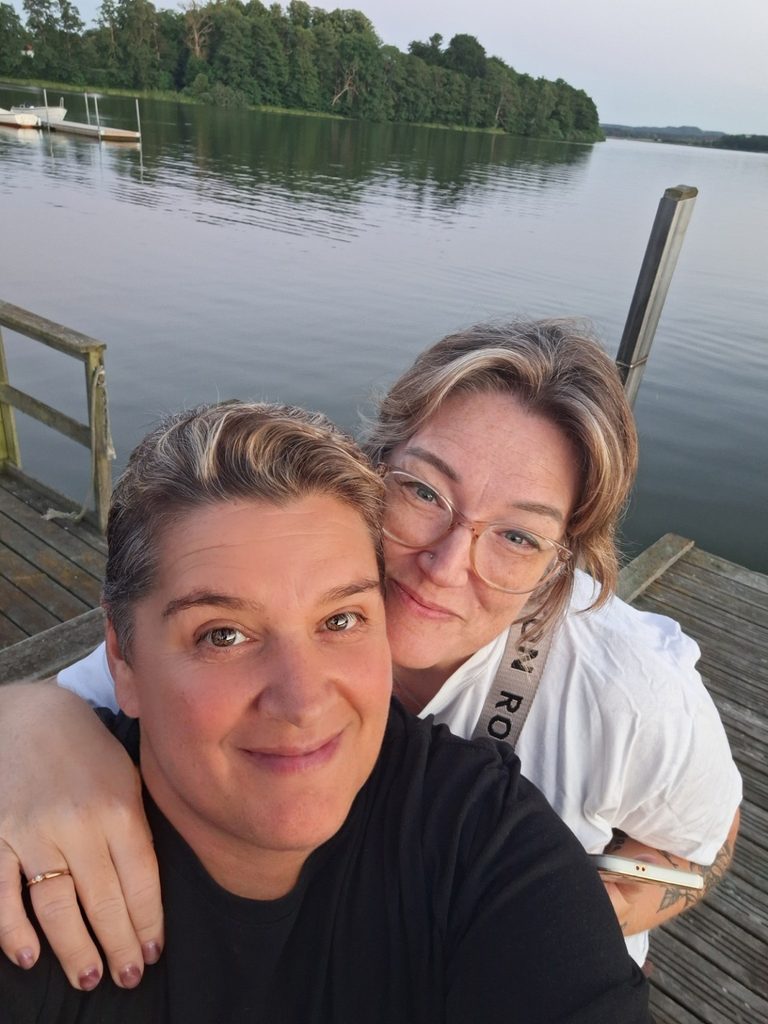
It began with a conversation on TikTok. On 7 December 2025, Lenie Maré, an entrepreneur in the small Western Cape town of Darling, started chatting with Ninna Andersson, who lives in Sweden. Neither was looking for love. “In fact, we were quite clear that friendship was all we wanted,” the couple say.
But the conversations kept going. “There was no pressure to impress each other, no expectations and no need to pretend,” they recall. They laughed at ridiculous things, swapped stories about their lives and shared their fears.
When Andersson finally flew to South Africa in February, Maré was waiting at the airport with flowers, “feeling more nervous than I can possibly describe”. After months of messages across two continents, the friend she had come to know was suddenly standing in front of her. “That friendship had already become something extraordinary,” Maré says.
Today the two have turned that experience into Bloom LGBTQ+, an Android app for LGBTQ+ adults that puts friendship, chosen family and community first. Dating is available, but entirely optional.
Loneliness in a crowd
For Maré, the idea has been a long time coming. “I’ve carried a dream of helping LGBTQ+ people feel less alone for many years,” she says. “Ninna believed in that dream and encouraged me to bring it to life.”
Life in a small town, she explains, has shown her that community is not always something you can simply walk out your front door and find. “Loneliness isn’t necessarily about being physically alone,” she says. “You can be surrounded by people and still feel that nobody truly understands you.”
Both women know that coming to terms with who you are does not follow a single timeline. Maré came out at around 20. Andersson was 40. “Accepting yourself and feeling completely comfortable in your own skin can be a much longer journey,” Maré says. For people who come out later in life, she adds, it can be especially isolating: finally finding the courage to be yourself, only to realise you don’t know anyone who shares your experience.
What they hope Bloom can offer is quite ordinary, and that is the point. “Sometimes you don’t need romance or a grand life-changing moment. You just need someone to have coffee with,” Maré says. “Someone who makes you feel normal, because you should never have had to feel otherwise.”
Friendship first
The couple chose to lead with friendship because, as they put it, “belonging is about so much more than romance”. Plenty of dating apps exist. But where, they ask, does the woman approaching 50 go when she simply wants new friends? Or the person who has just come out and needs someone to talk to? Or someone who has moved to a new town and lost their social circle?
“You should be able to join simply because you’re looking for your people,” they say.
Their cross-border relationship has also shaped how they think about belonging. South Africa has strong constitutional protections for LGBTQ+ people, they note, but “legal protection and everyday acceptance are not always the same thing”. Sweden, too, has its own challenges, and loneliness and prejudice exist even in societies widely seen as progressive. Their conclusion is simple. “Belonging isn’t something guaranteed by geography. It’s something we create through how we treat one another.”
That outlook influenced features such as translation tools and ways to connect beyond your immediate surroundings, so that someone in a small South African town feels as welcome as someone in Stockholm or Sydney.
Honest about the early days
Bloom launched on Google Play on 25 July 2026 and is still very young. The founders are candid about that. “We aren’t going to claim that hundreds of friendships have formed when we don’t have the evidence to support it,” they say.
Their biggest challenge is what they call community density: enough LGBTQ+ people in the same towns and regions that a new member has a realistic chance of meeting someone nearby. Without it, they admit, even a well-designed platform can feel quiet. “We want people to actually find each other,” they say.
They are equally clear about the limits of what an app can do. Bloom includes privacy and safety tools such as Stealth Mode, blocking and reporting, which matter for members who may not be openly LGBTQ+ in their everyday lives. But the founders describe safety as ongoing work, and they are a small, self-funded team working to strengthen moderation. “An app cannot replace professional mental-health care, emergency services or real-world support,” they say. What it can hopefully do is help someone find connection and point them towards appropriate resources.
They also draw a distinction worth remembering. “Inclusion means opening the door and making sure people are invited in,” they explain. “Belonging is what happens when someone walks through that door and realises they don’t have to change who they are to stay.”
Their hope is a modest one with a big meaning. “If Bloom helps even one person experience that feeling,” they say, “then something that started as a dream between two women living almost 10,000 kilometres apart will have become something truly meaningful.”
Bloom LGBTQ+ is available for Android on Google Play: https://play.google.com/store/apps/details?id=com.bloomlgbtq.app