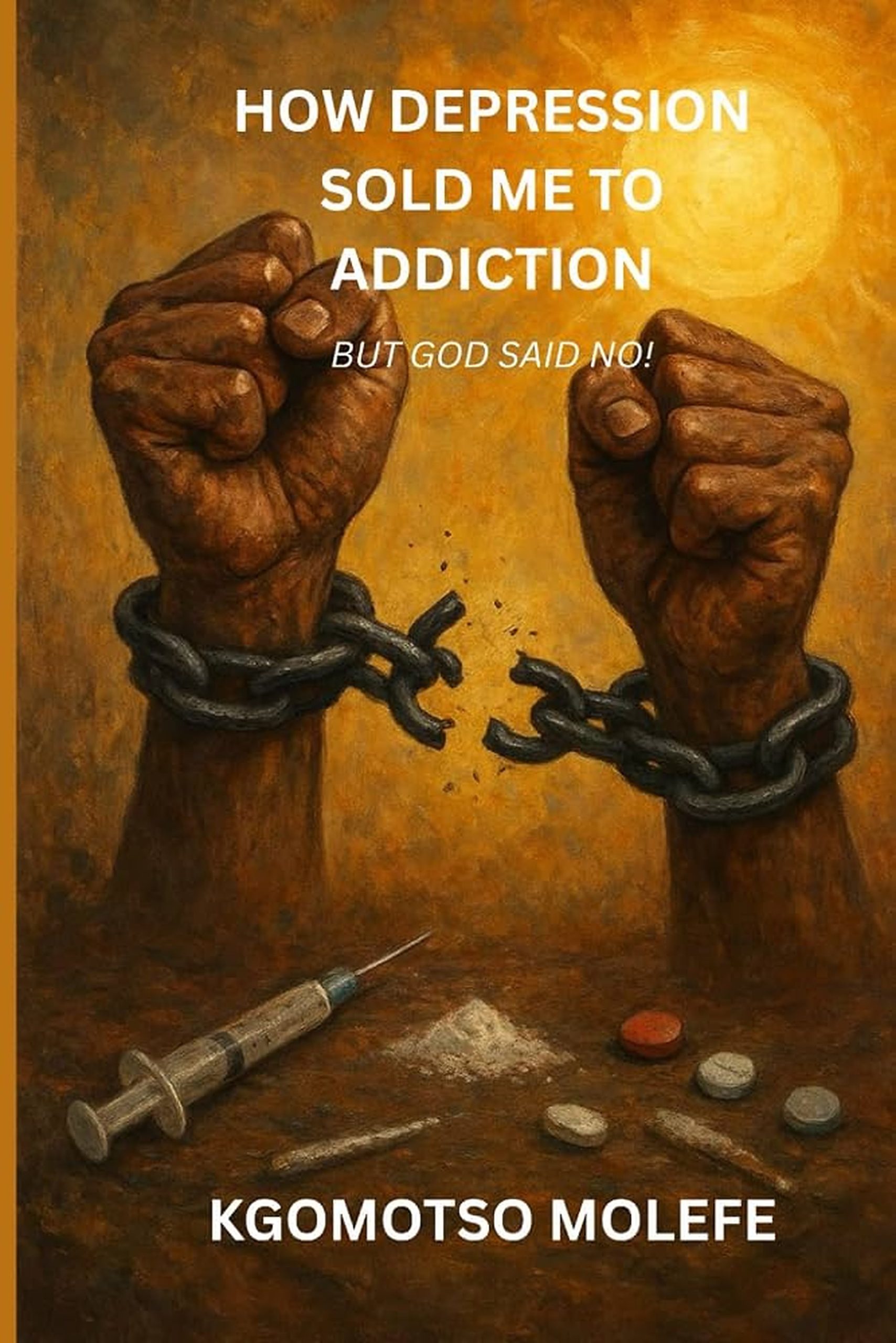
There is a particular kind of silence that surrounds people who are struggling but still showing up: still going to work, still smiling in family group chats, still functioning in the eyes of everyone around them. Kgomotso Molefe’s memoir, How Depression Sold Me to Addiction, is written from inside that silence. It is not a clinical account of mental illness, nor a tidy redemption story told from a safe distance. It reads as a first-person reckoning with what happens in the years before a person breaks, and what it costs to survive that breaking.
The book’s central premise, that depression can quietly usher a person toward addiction, is one that South African readers will recognise even if they have never had language for it. Emotional pain that goes unacknowledged rarely disappears; it tends to look for an exit. For Molefe, that exit was addiction, and the strength of the memoir lies in how honestly she traces the logic of that path. She does not present addiction as a moral failure or a sudden collapse, but as something that made a strange kind of sense at the time, a way of numbing what felt unbearable and unspeakable.
What makes this memoir valuable, particularly for a South African readership, is its refusal to separate mental illness from the ordinary textures of daily life. Depression is often imagined as a dramatic, visible crisis, yet Molefe’s account suggests otherwise. It shows how a person can be unravelling quietly for years while everyone around them assumes things are fine, a pattern that will feel familiar to many readers in a country where conversations about mental health are still catching up with the scale of the need. Organisations such as SADAG have long pointed out how many South Africans live with depression without ever receiving a diagnosis or support, and Molefe’s memoir gives that statistic a human shape.
The book does not shy away from the harder parts of the journey, the confrontation with what addiction had cost her, and the slow, unglamorous work of finding a way back. There is no suggestion that recovery is linear or complete once achieved. Instead, the memoir seems more interested in honesty than in neatness, which is part of what gives it credibility. Readers who have lived through their own versions of this story, or who love someone who has, are likely to find something recognisable here rather than something performed for an audience.
Stylistically, the strength of a memoir like this rests on voice, and Molefe writes as someone unafraid to implicate herself in her own story. That kind of vulnerability is not easy to sustain across a full book, and it is precisely what separates memoir from self-help. It asks the reader to sit with discomfort rather than resolve it too quickly.
How Depression Sold Me to Addiction will resonate most with readers who have felt unseen in their struggles, or who are trying to understand a loved one’s slow drift toward something destructive. It is also a useful text for anyone working in mental health spaces who wants a reminder of what the clinical language of “comorbidity” actually feels like from the inside. Molefe has written a book that trades tidy answers for something more honest: a record of what it takes to survive yourself, and then to keep going.
The book is available on Amazon.com for R280. Readers who would prefer to purchase directly from Kgomotso Molefe can reach her through Instagram at @authorkgomotso or via email at authorkgomotso@gmail.com