Londiwe Buthelezi
19 October 2026
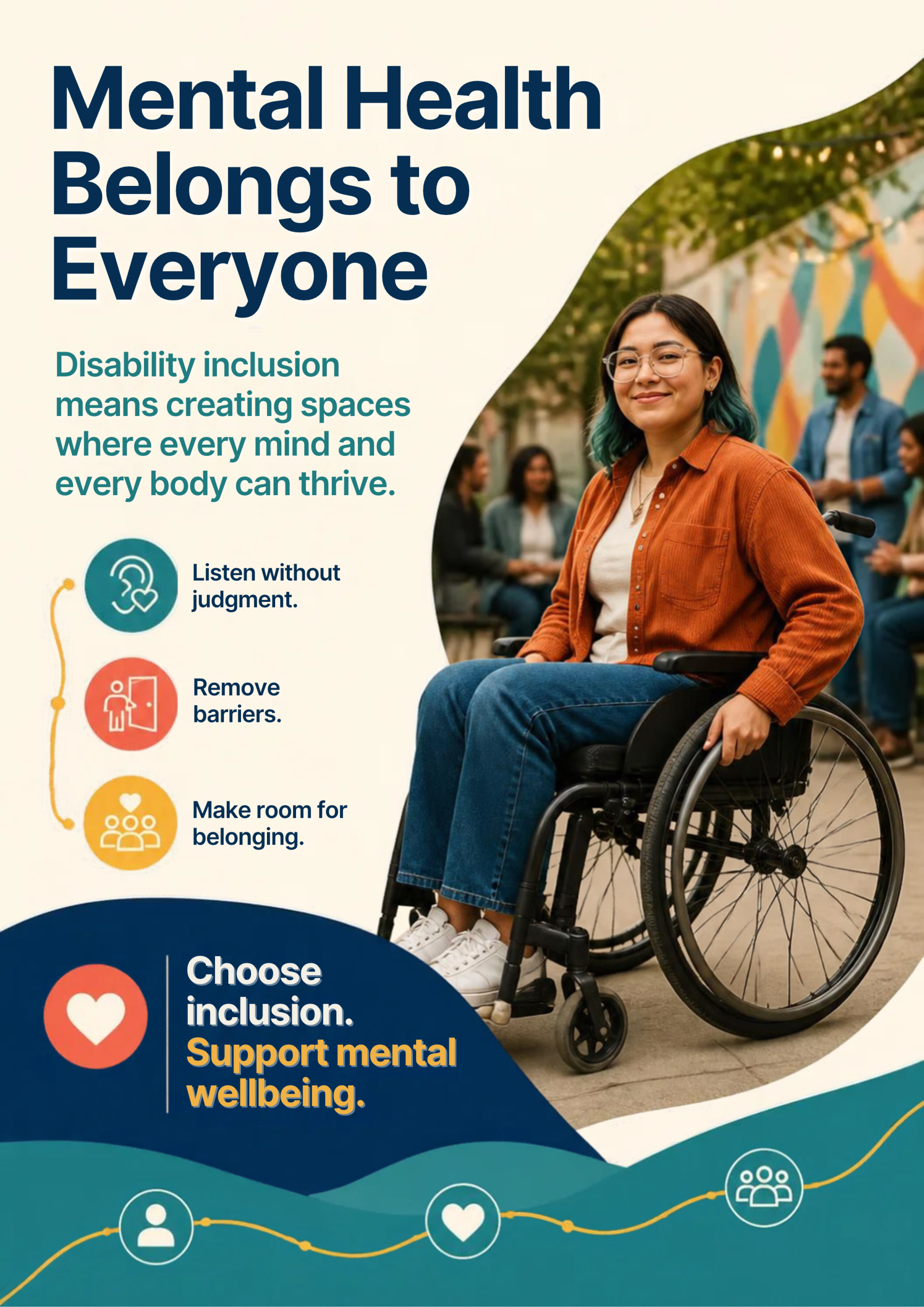
Nomvula, a woman in her thirties, has used a wheelchair since a car accident a decade ago. Her physical disability is visible and, in many ways, accommodated; her workplace has a ramp, and her building has an accessible bathroom. What is far less visible, and far less accommodated, is the depression that crept in during her long recovery and has never fully lifted. “People assume that because I’ve adapted to the chair, I’ve adapted to everything,” she says. “No one ever asks how I’m coping in my head. They only ever see the wheels.” Her frustration points to something disability advocates in South Africa have been raising for years: physical access is only part of the picture, and mental health is too often left out of the inclusion conversation entirely.
The scale of the gap is significant. According to figures raised at a recent University of Johannesburg conference on mental health and human rights, eight out of every ten people living with a psychosocial disability in South Africa are unemployed, and almost half a million learners with intellectual impairments are currently out of school. These are not abstract numbers; they represent people who are, in effect, excluded twice: once by a health system that struggles to reach them, and again by workplaces, schools and public spaces that were never designed with their needs in mind.
Part of the challenge lies in how psychosocial disability, disability arising from mental health conditions such as severe depression, bipolar disorder or schizophrenia, is often treated differently to physical disability, even though both fall under the same constitutional and legal protections. The South African Federation for Mental Health has used its own awareness campaigns to push back against this gap, pointing out that with only around five percent of the national health budget allocated to mental health, an estimated nine in ten South Africans living with mental health conditions remain untreated. For people whose psychosocial disability intersects with poverty, unemployment or a physical disability, that shortfall compounds quickly.
Professor Justin August, chairperson of South Africa’s Professional Board for Psychology, has framed the stakes in plain terms. “Mental health is not a luxury, it is a right,” he has said, arguing that ensuring every South African has access to quality, affordable and culturally sensitive care is a collective responsibility, not an optional extra. That framing matters for disability inclusion specifically, because it resists a common but damaging assumption, that mental health support is a secondary concern once physical or practical needs have been met, rather than a right that stands equally alongside them.
Researchers in the field of disability studies have also pointed to a quieter, structural problem: that psychology training in South Africa has historically given little attention to the lived experience of disability itself, leaving many practitioners underprepared to support disabled clients with the nuance their circumstances require. Closing that gap means more than adding a module to a curriculum. It means actively including disabled people, including those with psychosocial disabilities, in shaping the policies and services meant to support them, rather than designing systems around them without their input.
For someone like Nomvula, meaningful inclusion would not look like an extra brochure in a waiting room. It would look like a workplace wellness programme that assumes disabled employees are also managing mental health, not just mobility. It would look like a therapist trained to understand her experience without needing it explained from scratch each time. It would look like being asked, genuinely and often, how she is coping, not just how she is getting around.
South Africa’s push toward access and inclusion this Mental Health Awareness Month cannot stop at ramps and accessible bathrooms. True inclusion means recognising that disability and mental health are not separate boxes to tick, but often the same struggle, seen from two different angles, and both deserve to be seen in full.