Thabisile Gumede
17 August 2026
Siphokazi Zuma remembers the sound of her grandmother’s amasi calabash – a dull, rhythmic knock against the kitchen wall as it fermented on the windowsill. “She used to say, feed the mind by feeding the mouth properly,” Siphokazi recalls. At the time, it sounded like an old woman’s proverb. Now, at 34 and three years into a battle with anxiety, she finds herself back in that kitchen, culturing her own amasi.
“I spent years chasing chia seeds and imported greens I could barely pronounce,” she says. “Meanwhile, the answer might have been in my grandmother’s fridge the whole time.”
Siphokazi’s story isn’t unique. Across South Africa, a quiet reconsideration is underway – not of Western nutrition science, but of the foods our grandmothers trusted long before “gut-brain axis” became a wellness buzzword.
Amasi, the fermented milk staple of countless South African households, is rich in live bacterial cultures. Morogo – wild greens like imifino and pumpkin leaves – is dense in folate and magnesium, both linked to mood regulation. Sorghum and millet, once dismissed as “poor man’s grain,” carry fibre and micronutrients that support the microbiome largely stripped from more refined, imported alternatives.
“We’re not discovering anything new,” says Dr Lindiwe Mahlangu, a dietitian and researcher focused on nutritional psychiatry. “We’re finally measuring what was already working. The gut produces the majority of the body’s serotonin. When we look at amasi’s probiotic profile or the folate content in morogo, we’re looking at ingredients that were quietly supporting mental wellbeing long before we had the lab tests to prove it.”
Dr Mahlangu is careful, though, not to romanticise the past. “This isn’t about telling people to abandon modern medicine or clinical treatment for depression and anxiety. Food is one part of a much larger picture – but it’s a part we’ve undervalued, especially when it’s our food.”
Part of the problem, argues food anthropologist Thabo Ngwenya, is that the wellness industry has largely marketed mental-health-supportive eating through an imported, aspirational lens – kombucha instead of amasi, quinoa instead of sorghum – pricing out and alienating the very communities whose traditional diets already offered something comparable.
“There’s a kind of nutritional colonialism at play,” Ngwenya says. “We’re told wellness looks like a smoothie bowl from a Cape Town café, when it might just as easily look like a bowl of umleqwa stew and morogo at a table in Nquthu. The nutrients are there. The story around them just hasn’t been told.”
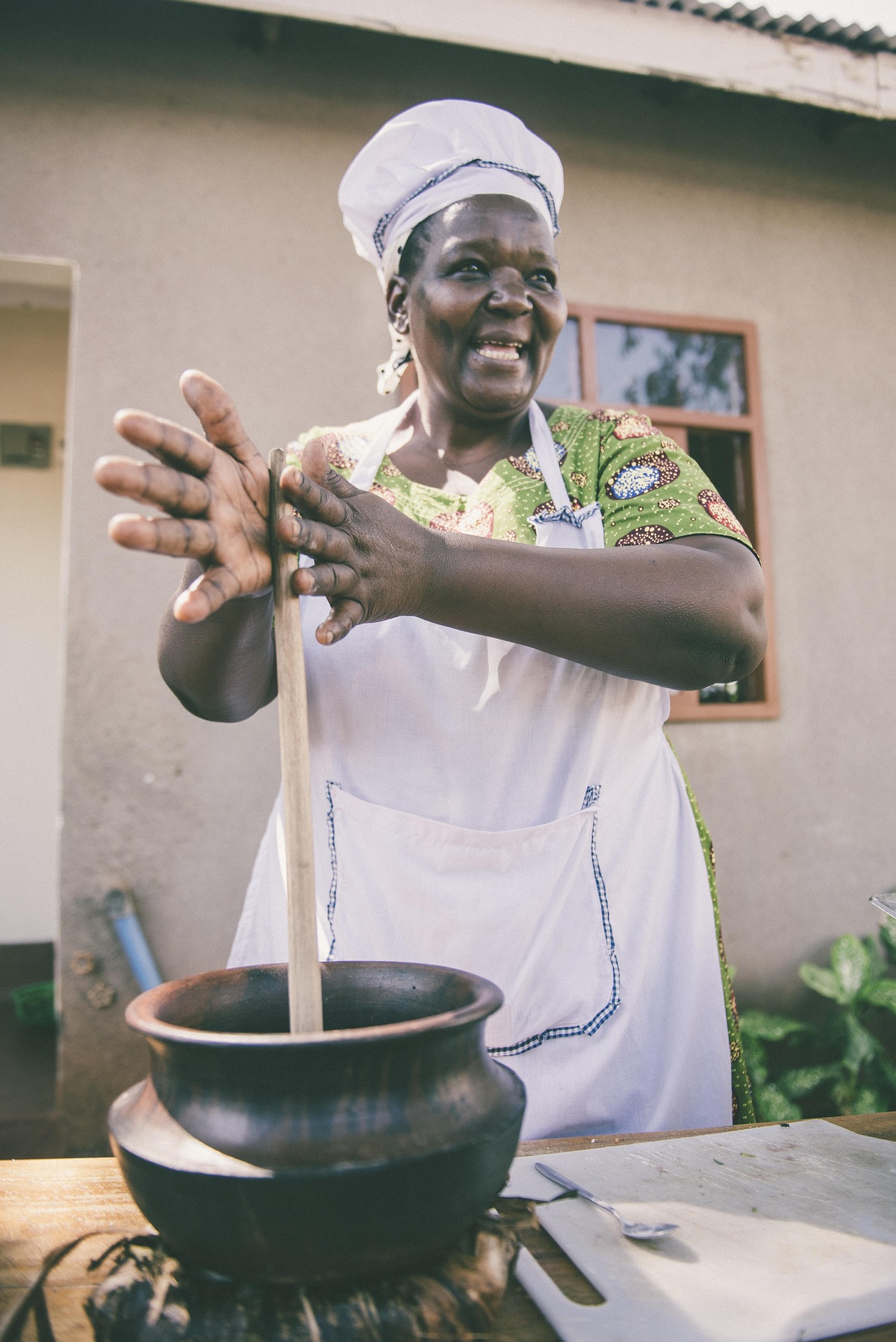
For Siphokazi, the shift wasn’t just nutritional – it was psychological. Fermenting her own amasi became a ritual, a small daily act of care that her therapist later pointed out mirrored mindfulness practice. “There’s something about doing what my grandmother did, with my own hands, that settles something in me,” she says. “It’s not a cure. But it’s a thread back to something steady.”
Dr Mahlangu sees this pattern often in her practice. “Reclaiming traditional food isn’t just about nutrients on a plate. It’s about identity, continuity, belonging – all of which are protective factors for mental health in their own right.”
As South Africans increasingly look inward for answers the wellness industry hasn’t offered them, the message from the kitchen may be simple: sometimes healing isn’t found in what’s new, but in what was nearly forgotten.